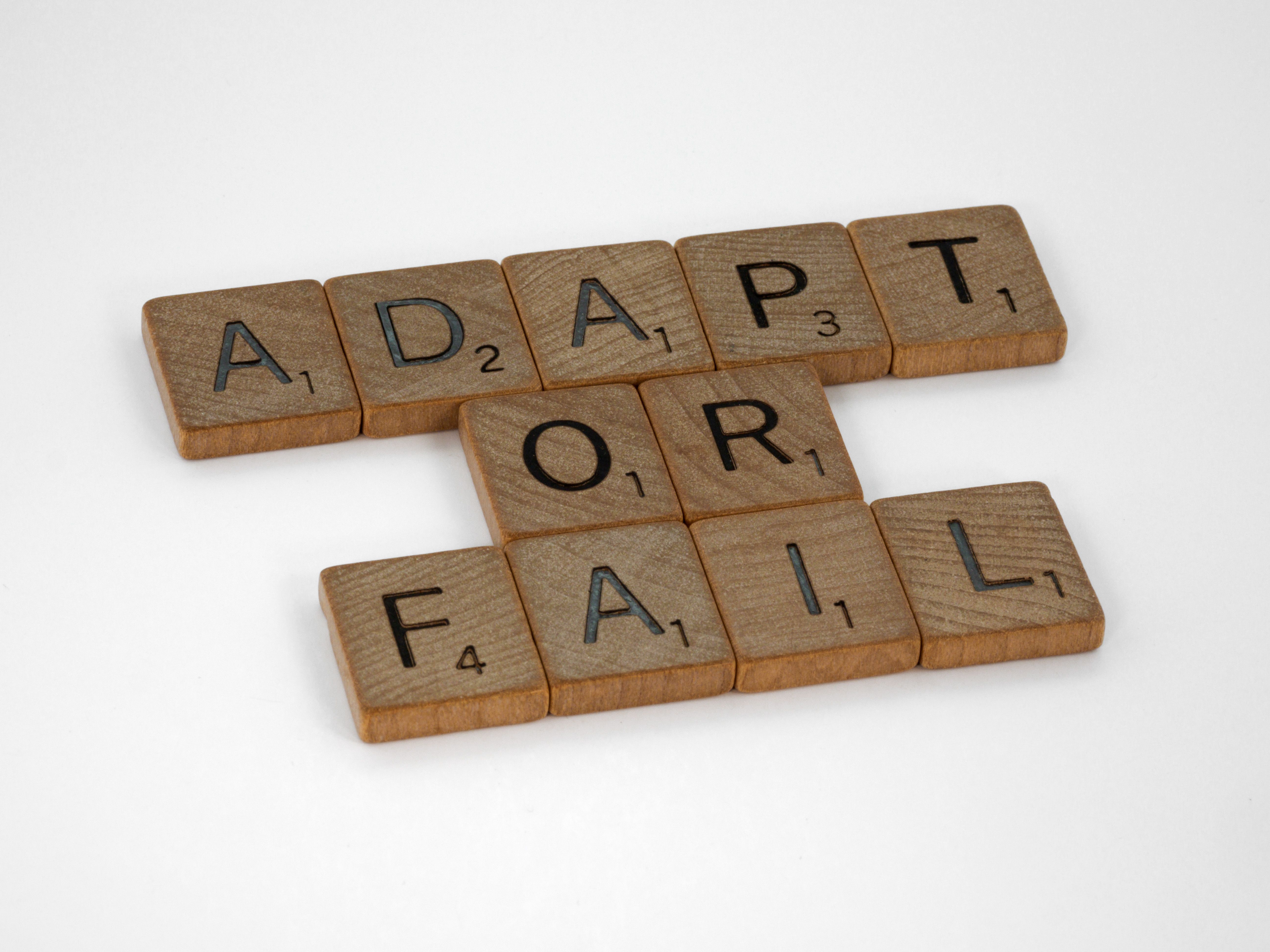
After writing my last piece I got to thinking a bunch about the problem of how to live successfully when you don’t really know what is going to happen. Which, to be clear, is always. It’s clear to me that change is accelerating and thus most of us will be navigating what is a more turbulent world over the coming decades. We aren’t built for that, evolution did not select for brains that handle a rapidly changing society because no such thing ever existed.
A core view of mine is you do not know what is going to happen. I do not know what is going to happen. The person with the most confident five-year plan does not know what is going to happen. The CEO of some company doesn’t know what is going to happen. Experts and academics don’t know. No one actually knows. People will predict the future and they’ll even occasionally be right right, but that is not the same thing as knowing. There are a lot of people in the world and a lot of them make guesses and predictions and so just by statistical odds a few of them will look brilliant - most aren’t and even many that look good never predict with enough details to be useful. Okay, so if you think you know the future - stop reading, this will likely be a waste of your time.
Btw, I think a lot of bad life philosophy starts from pretending the future is predictable. It attempts to provide a predictable or certain future, but it can’t - and therefore the advice, while sounding good, is bad because it’s premised on the impossible. Also, lots of life advice is written by successful people and largely reflects survivor bias - that’s a general warning.
But I get it, people want certainty. They want a plan. They want a path. They want to believe that if they make the right decision now, follow the right process, pick the right job, marry the right person, buy the right house, invest in the right thing, raise their kids the right way, then life will basically behave. But life does not behave. Life changes. People change. Markets change. Technology changes. Health changes. Your own priorities change, and sometimes they change for good reasons and sometimes because you were wrong about what you wanted - this is more common than most people want to admit about themselves and also is a really good reason to not live impulsively, forcing choices through a gauntlet of tests and time.
So the philosophy I try to live by is pretty simple:
Build a life that can absorb reality.
Not a life that assumes everything will go well, it won’t. Not a life that assumes everything will go badly, it won’t. Not a life optimized for a single perfect version of the future. A life that can take a hit, learn something, adjust direction, and continue moving towards what really matters (to you.)
Now, I’m not suggesting that you become some aimless directionless sole just going wherever the ying-and-yang of the day-to-day world pushes you. It is really the opposite. Aimless people drift because they have no principles, so they get pushed. Over-planned people break because their plan becomes their principle, often pulling them to places that no longer make sense. I think it’s better to have a life with clear direction but without rigidity - be adaptable, open to change, and conscious of how reality is changing your options. Know what you are generally trying to become, know what you want to achieve in life over the next 5-10-20 years, know what matters to you, know what tradeoffs you are willing to make, and then make choices that keep you strong enough and flexible enough to keep going when reality is not what you expected.
That sounds obvious. Most useful things do. But then people do the opposite constantly.
They build lives with no slack. They spend every dollar or refuse to spend anything. They build rigid schedules or no schedules. They define success around fragile status markers or never define success. They prioritize today vs. tomorrow with no tradeoff definition. They stay in jobs they hate because the title sounds good or quit good jobs in search of the undefined. They avoid learning new things because their existing competence is comfortable. They mistake a stable routine for a stable life or blow up a stable life because it feels routine. Then something changes and they are shocked that the life they built for one set of conditions does not work under another set of conditions.
This is where I think adaptability becomes not just a skill but a life philosophy.
My goal is not to predict the future. My goal is to be the kind of person who can handle more futures, both the ones I expect want and imagine and the ones unexpected unwanted and unimagined. It’s to be the kind of person that has focus and determination that guides me through the future without creating rigidity and rules that block adaption to reality (aka, become too fragile and resistant to a changes in the reality of the world.)
So here is how I think about living like you will need to adapt:
1. Treat stability as something you create, not something the world owes you.
A lot of people talk about wanting stability, which is understandable, but they often mean they want the world to stop changing around them. That is not stability. That is fantasy.
Real stability comes from capacity. Skills create stability. Savings create stability. Good relationships create stability. Health creates stability. Clear thinking creates stability. The ability to admit you were wrong creates stability. These things do not prevent bad outcomes, but they give you more room to respond when bad outcomes happen.
If your life only works when nothing goes wrong, your life is unstable even if it looks normal from the outside.
2. Make choices that increase your ability to choose later.
I am increasingly convinced that one of the most useful ways to judge a decision is whether it gives future-you more good options or fewer good options. Not infinite options, because that is impossible and also probably a miserable way to live, but meaningful options.
Some choices are worth closing doors for. Marriage closes doors. Having children closes doors. Starting a company closes doors. Moving cities closes doors. Committing deeply to anything closes doors. That is fine. A life where you never close doors is not a life of optionality, it is a life of avoidance.
3. But you should know what doors you are closing and why.
Too many people close doors by accident. They build expenses that trap them. They let skills decay. They damage relationships casually. They make health choices that compound badly. They become so identified with one way of being that they cannot imagine another. Then they call it fate or bad luck when really it was a series of choices that narrowed the path.
Again, there is real bad luck, obviously. But there is also self-created fragility, and we should be honest about that.
4. Prefer principles over plans.
Plans are useful. I like plans (a lot.) But plans are only useful until reality changes, which it always does. Principles survive contact with reality better than plans do.
A plan says: I will do this exact thing in this exact order.
A principle says: I will make choices that preserve my health, deepen my relationships, improve my skills, reduce unnecessary complexity, and move me toward work I believe is useful.
The second one is much harder to fake. It also gives you a way to adapt without pretending adaptation is failure.
This matters because people often stay loyal to plans long after the plan has stopped making sense. They do this because changing the plan feels like admitting they were wrong. But being wrong is not the problem. Staying wrong because your ego wants consistency is the problem.
A good principle should make it easier to change your mind.
5. Do not confuse comfort with success.
Comfort is not bad. I like comfort. Most people like comfort. That is why it is dangerous.
Comfort can be the reward for good choices, but it can also be the thing that quietly kills growth. You get comfortable being competent at one thing. Comfortable around people who already agree with you. Comfortable in routines that make today easier but tomorrow smaller. Comfortable with explanations that protect you from having to change.
A lot of adult life is just learning to tell the difference between healthy comfort and numbing comfort.
Healthy comfort restores you. Numbing comfort reduces you.
And unfortunately you usually know which one it is. You may not admit it, but you know. There is a difference between resting after meaningful effort and avoiding the thing you know you need to confront. There is a difference between enjoying your life and shrinking your life so it never challenges you.
6. Build systems for your worst normal self.
This is one of those things that sounds negative but is actually freeing. You should not design your life around your best self. Your best self is unreliable. Your best self is well-rested, motivated, thoughtful, patient, disciplined, and unusually aware of long-term consequences. Great. Congratulations to that person. They show up occasionally.
Your systems need to work for the more common version of you: tired, distracted, slightly selfish, slightly lazy, overconfident, under-informed, and trying to justify whatever is easiest right now.
That is not an insult. That is just being a person.
So make the good choice easier. Put things on the calendar. Write things down. Automate what should be automated. Remove temptations you do not actually want to fight every day. Create recurring reviews. Ask people to hold you accountable. Make bad choices more inconvenient and good choices more obvious.
Willpower is fine, but it is not a strategy. It is a backup generator.
7. Use writing as a mirror.
I come back to the write it down theme a lot in my life, I think the unwritten idea/plan/strategy is not really just a random thought. Writing is how you start stress testing it.
Thinking in our head feels productive because there is no evidence of how circular it is. Writing is annoying because it exposes the gaps. That is why it works.
If you cannot write down what you believe, why you believe it, what choice you are making, what tradeoff you are accepting, and what would cause you to change your mind, then you probably have not thought as clearly as you think you have.
This does not mean you need to journal every morning with a candle and a special pen. Do that if you want, I guess, but that is not the point. The point is to externalize your thinking so you can inspect it. Your brain is too good at protecting you from yourself.
Write when you are making an important decision. Write when something goes badly. Write when something goes surprisingly well. Write when you notice you are repeating the same problem. Write when you change your mind. Especially write when you do not want to, because that is often when you are hiding from the useful part.
8. Keep your identity smaller than your ability to grow.
This is a hard one. People love identities because identities simplify decisions. I am this kind of person. I am good at this. I do not do that. People like me believe these things. People like me live this way.
Some of that is fine. You need a coherent self. But if your identity becomes too large, it starts making choices for you. Worse, it starts rejecting evidence for you.
The more tightly you define yourself, the harder it is to become better.
I think a better approach is to identify more with the process than the current version of yourself. I am someone who learns. I am someone who updates. I am someone who tries to tell the truth faster. I am someone who can be embarrassed and survive it. I am someone who can change behavior when the evidence is clear.
That kind of identity gives you room to grow. It does not make growth easy, but it makes growth less threatening.
9. Measure your life by trajectory, not snapshots.
Life is a long continuous event. Snapshots don’t tell you much. We use snapshots to feel good or allow us to excuse the bad, but snapshots are really misleading. A bad month can look like failure. A good month can look like success. Neither necessarily tells you much.
Trajectory matters more. Are your choices generally making you healthier, more capable, more honest, more useful, more connected to the people who matter, and more aligned with your definition of a good life? Or are they slowly making you weaker, more reactive, more resentful, more dependent, more distracted, and more trapped?
The scary thing is that both trajectories can feel normal while you are on them. And, in fact, I’ll bet the negative trajectory will actually feel better, in the moment, while you are living it.
That is why reflection matters. Not endless introspection, because that can become its own form of avoidance, but enough reflection to notice direction. You need to know whether the way you are living is compounding into something you actually want.
10. Accept that adaptation has a cost.
Changing direction is not free. Learning new skills is not free. Admitting you were wrong is not free. Leaving a comfortable path is not free. Building capacity before you need it is not free.
But neither is fragility.
People often avoid the cost of adaptation because the cost is immediate and visible. The cost of not adapting is delayed and easier to deny. You can avoid exercise today. You can avoid the hard conversation today. You can avoid learning the new tool today. You can avoid looking at your finances today. You can avoid questioning your assumptions today.
And maybe nothing bad happens today.
That is the trap. Bad compounding usually looks harmless at first.
11. Do regular maintenance on your life philosophy.
Your philosophy should not change every week. If it does, it is not a philosophy, it is a mood. But it should be examined. Maybe quarterly. Maybe twice a year. Maybe whenever something major changes. You’ll figure out when is the right time, just be honest - are you examining it because it’s inconvenient or because something fundamental has changed (long-term circumstances and/or long-term goals)
Ask yourself:
What am I optimizing for?
What am I avoiding?
What assumptions am I making about the future?
Which of my choices are increasing future optionality?
Which of my choices are making me fragile?
What have I learned that I have not yet admitted?
Where am I using busyness, comfort, or identity to avoid growth?
These are not fun questions and that’s a good way to know they might be useful.
The philosophy, again, is simple: build a life that can absorb reality.
Make choices. Learn from them. Preserve capacity. Avoid unnecessary fragility. Tell the truth to yourself faster. Do not worship normality. Do not overfit your life to the present moment. Do not pretend you know the future. Do not drift just because planning is imperfect. Pick direction, build strength, keep slack, and update when reality gives you better information.
There are no guarantees. You can do this well and still have things go badly. That is life. But the absence of guarantees is not an excuse for passivity. It is an argument for making better choices while you can.
You do not need a perfect plan. Thankfully, because there is no such thing as a perfect plan.
You need a life strong enough to keep becoming better when your plans stop working.